
World Science Festival – Illuminating the Abyss: The Unknown Ocean
May 28, 2010 by Ocean Doctor · Leave a Comment
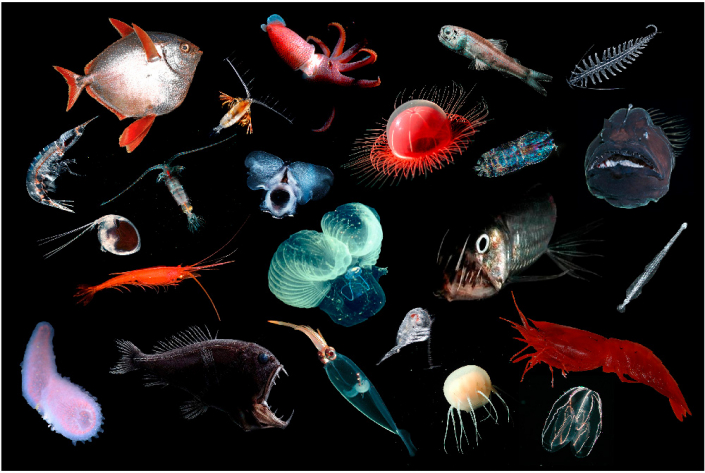
As part of this year’s World Science Festival in New York, join the “Ocean Doctor,” 1planet1ocean president Dr. David E. Guggenheim, along with TED prize winner and National Geographic Explorer-in-Residence, Dr. Sylvia A. Earle; Woods Hole Oceanographic Institution’s Dr. David G. Gallo, and Fabien Cousteau, in a panel moderated by ABC News’ Bill Weir, entitled, Illuminating the Abyss: The Unknown Ocean — Saturday, June 5, 2010, 4:30 PM – 6:00 PM at The Paley Center for Media.
Read more
Cuba Could Be Impacted by Gulf Oil Spill
May 15, 2010 by Ocean Doctor · 9 Comments
For the most up-to-date information on the BP Deepwater Horizon oil spill’s potential impacts on Cuba, please visit our special “Cuba at Risk” page.
Since its discovery of oil and natural gas reserves in the Florida straits, Cuba’s preparations for full-scale offshore oil and gas development has raised alarm in the United States, particularly in Florida where it is estimated that much of a catastrophic spill originating in Cuba would be swept by Gulf currents. Ironically, it is now Cuba that faces the threat of a massive oil spill by the United States. The disastrous oil spill from the BP Deepwater Horizon now threatens Cuba, the largest and most biologically diverse island in the Caribbean, due to those same Gulf currents. To make matters worse, the economic embargo imposed upon Cuba by the United States decades ago makes collaboration and coordination exceedingly difficult during this crisis. Read more
Acid Oceans: The Gravest and Most Immediate Planetary Threat Yet?
April 24, 2009 by Ocean Doctor · Leave a Comment
Ocean acidification may present one of the gravest threats to our planet’s ecosystems and yet it is also one of the least publicized aspects of the global climate change issue. Acidification is occurring very rapidly, causing unprecedented changes to the chemistry of the oceans. It’s been estimated that roughly half of human-produced CO2 emissions over the past two centuries (since the beginning of the industrial age) have been absorbed by the oceans, leading to a drop in ocean surface pH of nearly 0.1 units (on the logarithmic pH scale).
![]() Coral Reef in Timor (Photo courtesy of Nick Hobgood) |
Exploring, Studying Cuba’s Gulf of Mexico
September 1, 2007 by Ocean Doctor · 3 Comments
|
|
The Harte Research Institute for Gulf of Mexico Studies (HRI) at Texas A&M University-Corpus Christi and the University of Havana’s Center for Marine Research (CIM) [Centro de Investigaciones Marinas] are leading a collaborative effort, Proyecto Costa Noroccidental [Project of the Northwest Coast], a comprehensive multi-year research and conservation program for Cuba’s Gulf of Mexico coast. Dr. David E. Guggenheim, president of 1planet1ocean, is a member of HRI’s Advisory Council and also serves as HRI’s Cuba Programs Manager and is co-principal investigator of the project with Dr. Gaspar González Sansón of CIM. Read more
Exploration of Pribilof Canyon Now Under Way, Revealing Rich Ecosystem, Corals
July 30, 2007 by Ocean Doctor · Leave a Comment
![]() |
| Deepwater corals, like this sea whip (Halipteris willemoesi) photographed on Sunday by Timo Marshall, thrive in the deep waters of Pribilof Canyon |
Thanks to great weather, state-of-the-art equipment and a top-notch crew, it has been a productive weekend for the team aboard Esperanza which arrived on site at Pribilof Canyon Saturday morning (July 28) when David Guggenheim and Michelle Ridgway made the first tandem dive in two DeepWorker submarines into Pribilof canyon to a depth of just over 1,000 feet and began to document a fascinating diversity of life, including a variety of corals, anenomes, sponges and fish. On Sunday, the ship visited a second site in Pribilof Canyon where John Hocevar and Timo Marshall completed a successful tandem dive, documenting more corals and successfully collecting a number of specimens with DeepWorker’s manipulator arm for analysis by scientists around the world.
![]() |
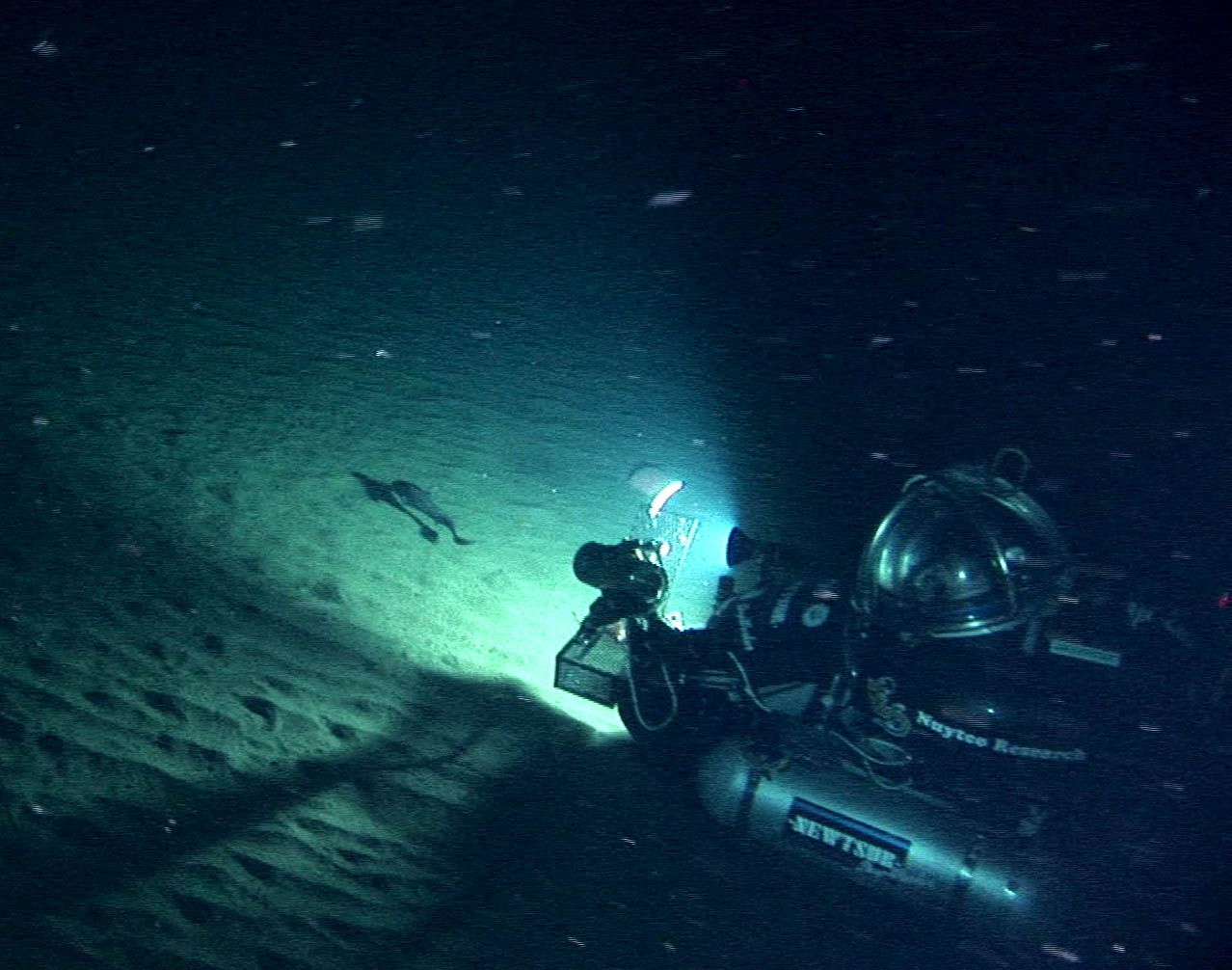
| John Hocevar (Greenpeace Senior Oceans Specialist) pilots DeepWorker at 1,100 feet in Pribilof Canyon (Video still by Timo Marshall – 29 July 2007) |
Already, the Greenpeace-led team has accumulated nearly 16 hours of bottom time (8 hours per sub), more than all of the previous research done in this region combined. The subs’ high-definition video cameras have already collected over 120 Gb of data. The subs are performing linear transects which will then be analyzed on the video. Twin lasers spaced 20 cm apart allow accurate analysis of the size of organisms encountered. Read more
Esperanza Sets Sail from Dutch Harbor: Bering Sea Expedition Under Way
July 27, 2007 by Ocean Doctor · Leave a Comment
![]() |
| DeepWorker submarines aboard Esperanza as the ship heads north into the Bering Sea, leaving the Aleutians behind. (Photo by David E. Guggenheim) |
The Expedition to the Bering Sea officially got under way as the M/V Esperanza departed Dutch Harbor, Alaska on Friday, July 27 at 4pm Alaska Daylight Time. The Esperanza will steam through the night — for roughly 15 hours — to its first destination, Pribolof Canyon near the Pribolof Islands in the Bering Sea. The first DeepWorker dives are scheduled for Saturday morning.
In June, an international team of researchers and conservation specialists recently completed a week of intensive training and preparations for this Greenpeace-led expedition to Alaska’s Bering sea. The Esperanza is carrying two manned submersibles, a remotely-operated vehicle (ROV) and the research team to the Bering Sea for a three week survey of Zhemchug and Pribilof Canyons, specifically to map and document deepwater corals living at depths of more than 1,000 feet. Read more